How to spot a government RFP written for another vendor (and when to walk away)
Learn the red flags that show a government RFP was written for another vendor, how to score them, and when walking away is the smarter bid.

Some RFPs are effectively decided before they post. A buyer may spend months learning from one vendor, then write the requirements in that vendor’s language.
Here’s how to spot if a government RFP is written for another vendor, when to continue pursuing it, and when to walk away.
TL;DR: How to spot an RFP written for another vendor
A government RFP may favor an incumbent when restrictive requirements, short timelines, and relationship-heavy scoring appear together. Check the public record for prior demos, pilots, contracts, and budget decisions, then weigh fit, buyer openness, and likely profit against proposal cost. Walk away when there is no credible path to win.
Why some government RFPs look written for another vendor
District, city, and university buyers rarely start as experts in the solution they need. They call vendors early to learn what’s possible, and some run a pilot. The vendor who teaches the buyer ends up shaping the requirements, often down to the vocabulary.
Incumbents hold the strongest version of that advantage in re-competes. They know the stakeholders and see how the product is used day to day, and they may have helped scope the work being bid.
This means a seller who first hears about the account when the RFP posts often arrives after the shaping is done.
How to spot a government RFP written for another vendor
The RFP itself is the first piece of evidence, and one odd clause proves little because every RFP carries quirks from past purchases. Look for patterns that repeat across requirements, timelines, and scoring, since tailoring to one vendor tends to show up in all three at once.
We recommend running these checks before anyone commits proposal hours.
Requirements and scope language that point to one vendor
The most common versions of “vendor language” look like this:
- Past performance requirements so specific that only one vendor’s customer list fits
- Brand-name features or proprietary module names written as must-haves, with no “or equal” language
- Niche certifications or partner designations that only one vendor holds
When federal funds pay for the purchase, 2 CFR 200.319 treats “unnecessary experience” requirements and brand-name-only specifications as restrictions on competition, which gives you grounds to ask the buyer to open them up.
Next, read the scope for borrowed vocabulary. Buyers who learned the category from one vendor often reuse that vendor’s feature names and marketing copy.
Here’s a hypothetical example:
- A generic requirement reads, “The solution must provide parent communication tools.”
- The mirrored version reads, “The solution must provide a Family Engagement Hub with one-tap SmartNotify alerts.”
Test each requirement with one question. Could two or more vendors reasonably meet it? When the answer keeps coming back no, the RFP is pointing at someone.
Timelines, Q&A, and format constraints
Short or aggressive response windows favor the vendor who saw the specs early. That vendor may have a draft half-written before the RFP posts.
You may request an extension as a test, since a buyer who wants real competition has a reason to grant one.
The Q&A period shows how open the buyer is. Warning signs include no pre-bid conference and non-answers to direct questions, such as replying “refer to the RFP” to a clarifying question.
Unusually brief answers are another flag. So are long answers posted at the last minute, which leave challengers no time to adjust.
Also, RFPs with restrictive page limits or named key personnel can make a compliant response unrealistic for anyone except the incumbent.
Evaluation weighting anomalies
The RFP scoring criteria may show more clues for pre-existing vendor preference.
For example, strong emphasis on “understanding of the district” or “familiarity with current operations” rewards whoever has already been inside the account. In Texas, school districts are required by law to consider a vendor’s past relationship with the district.
Other patterns tilt scoring toward one vendor too.
- Subjective criteria in the scoring give evaluators the option to favor a familiar name.
- A low price weight protects a higher-priced incumbent, and double counting lets one strength earn points in several categories.
Reading every RFP line by line to figure out whether to apply or not may work for one buyer.
Across an entire TAM, it’s almost impossible.
Starbridge’s AI RFP Finder & Proposal Writer flags RFPs automatically that already name a specific vendor or competitor, then scores each RFP by product fit, region, and win likelihood. Book a demo today to learn more.
Read the public record before the PDF
A buyer’s purchasing intent is often set in board meetings and budget discussions months before an RFP posts.
Board minutes can document pilots, budgets, and sole-source approvals, offering context for requirements before and after the RFP posts.
Reading that pre-RFP history of the buyer first tells reps whether an account deserves a bid at all, and how hard the incumbent will be to move.
Buyer-side evidence of tailoring
Before an RFP is released, buyers often leave clues in public documents. These early signals can reveal which vendors they’re considering, what they’re planning to buy, and where new opportunities may be emerging:
- Board minutes that mention a vendor demo, presentation, or pilot
- Sole-source approvals or temporary bridge contracts on board agendas that may keep an incumbent in place during a new procurement
- Piggyback purchases off another jurisdiction’s contract with the same vendor
- Budget line items that name a specific product, one of the strongest indicators of all
Finding these clues in public documents means combing board PDFs, meeting recordings, and budget documents across thousands of accounts. By the time a rep spots a demo in the minutes, the RFP has often been posted.
Starbridge’s Buying Signal Monitor does that combing for you.
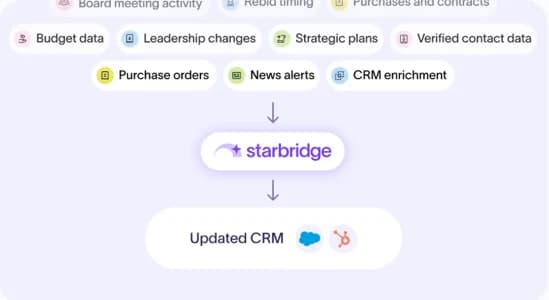
It tracks buying signals, such as a new grant or a contract about to expire, across every account in a territory, watching board discussions, leadership changes, budget line items, job postings, and contract expirations. Reps see buying intent 6 to 18 months before a formal solicitation, while requirements are still taking shape.
Book a demo today to see how Starbridge’s Buying Signal Monitor could work for your organization.
Incumbent, spend, and expiration as the first filter
Before reviewing an RFP, start by answering three questions: Who is the incumbent vendor? How much is the buyer spending? And when does the current contract expire or allow an opt-out?
Those facts live in approved purchase orders, contract records, and renewal clauses. Piecing them together by hand takes hours per account, and records requests can take weeks to come back.
Starbridge’s Public Spend Intelligence surfaces them instantly. FOIA automation pulls full competitor contracts with pricing, opt-out clauses, and expiration dates, and Starbridge has purchase order data for 77% of state and local government, K–12, and higher education institutions out of the box.
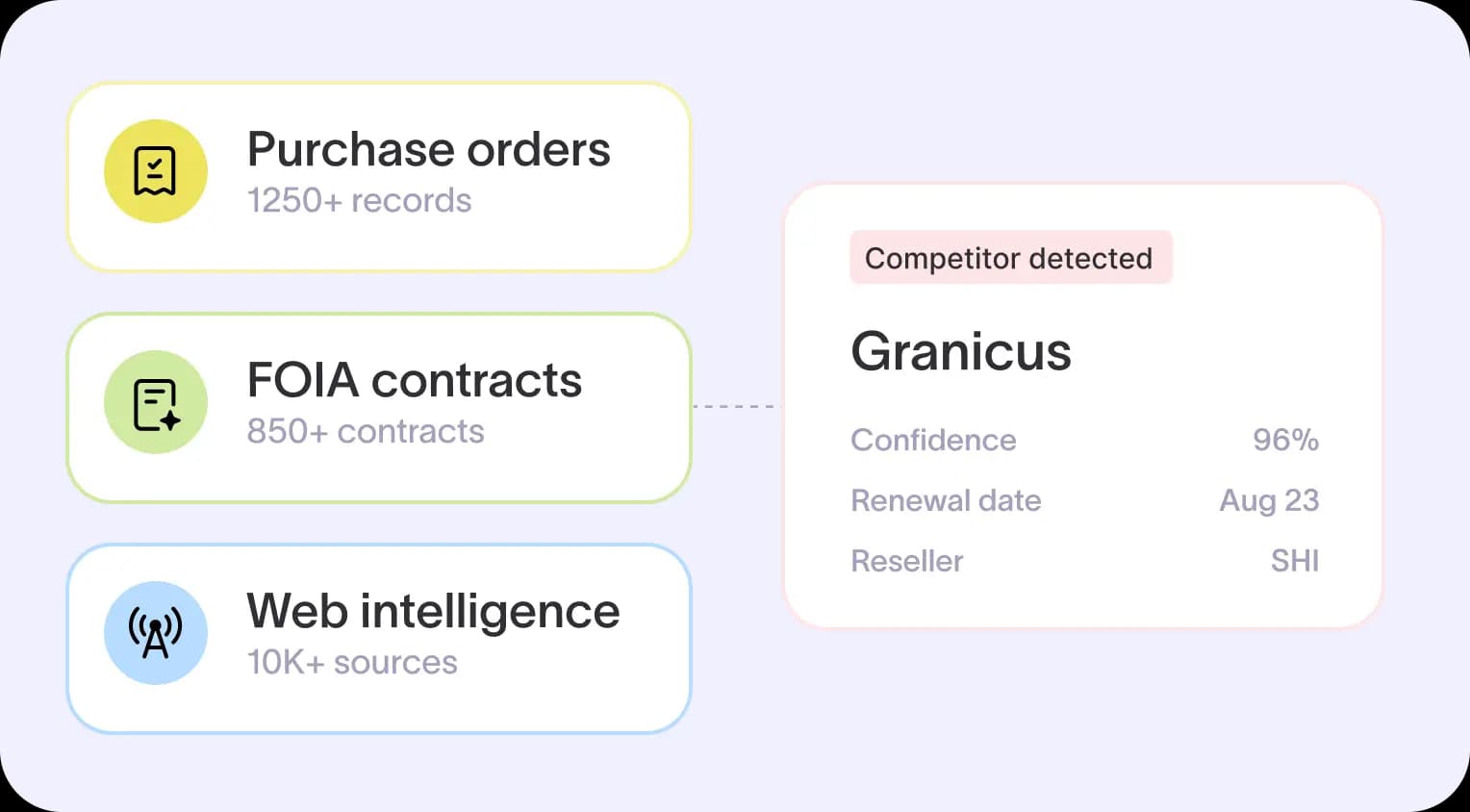
Frontline Education shows what that speed is worth. Its reps used to spend 20 to 30 minutes researching each account, and Starbridge cut that research time by 90%.
Signs the buyer actually wants a change
Board discussions about problems with the current tool point to vulnerability, and so do budget shifts away from the incumbent’s category. Unhappy buyers often reuse the old spec language because it’s the only template they have.
Public complaints about the current vendor are another sign. Leadership turnover is another reason to reassess, since a new superintendent, CIO, or department head inherits contracts they didn’t choose and can trigger vendor reviews.
IT is often a decision-maker in districts and cities, not just an evaluator. A new CIO can reopen a category everyone assumed was locked, especially when security or integration standards change.
Score the red flags and decide when to walk away
One red flag rarely justifies a no-bid, because most RFPs carry some legacy language, but stacked red flags do. Without a shared rule, every RFP that lands competes for the same rep hours.
A bid/no-bid scorecard the whole team can use
Score each RFP against the areas below, counting one flag per row that matches.
| Scorecard area | Red flag | Lowers the risk |
|---|---|---|
| Requirements | Only one vendor can meet them | Several vendors can meet them |
| Timeline and Q&A | Short window or non-answers | Extension granted, direct answers |
| Evaluation weighting | Relationship criteria dominate (or specific criteria that seem to favor one vendor) | Price and outcomes carry weight |
| Buyer-side record | Demo, pilot, or named product in meeting minutes | No single vendor in recent records |
| Incumbent vulnerability | Recent renewal, no complaints | Complaints or new leadership |
| Relationship access | No contact before the RFP | A champion and a stakeholder map |
| Economics | Proposal cost exceeds expected value | Expected value exceeds proposal cost |
We recommend setting thresholds the whole team uses. One or two flags call for caution, three or four trigger a formal bid/no-bid review, and five or more favor walking away.
Treat those as starting points, and adjust them using your own win and loss data.
For the economics row, multiply expected gross profit from the contract by a realistic win probability. Then compare that expected value with the proposal cost.
Bids that pass still cost proposal hours. Starbridge’s AI proposal writer drafts each section from your product knowledge base and builds the compliance matrix, so teams can create proposals in half the time.
When an RFP isn’t worth pursuing
Some RFPs fail for reasons unrelated to tailoring. Walk away when you see any of these:
- Non-negotiable contract terms you can’t accept, such as uncapped liability
- A budget below your cost floor for delivery and support
- A buyer history of poor procurement behavior, such as canceled awards or repeated rebids
Declining an unwinnable bid is a smart decision, because a full proposal pulls hours from sales, solutions, legal, and leadership, and those hours carry a dollar cost.
The bigger cost is the winnable bids the team never had time to pursue.
A shared rule replaces rep optimism and gut feel with evidence. Reps stop arguing case by case, and leaders can see why every bid went out or didn’t.
What to do instead of walking away
An RFP that favors a specific vendor doesn’t always mean you should give up. Before the RFP is published, and while communication is allowed, ask the buyer why certain requirements are included. Some may be essential, while others may simply be carried over from previous contracts.
If the RFP has already been published, you may be able to challenge requirements that unfairly restrict competition. But deadlines are short. In Florida, for procurements covered by Section 120.57, you generally have 72 hours after posting to file a notice of protest. Consider the potential impact on the buyer relationship before taking formal action.
Walk away from the wired bid and win the next one
Not all RFPs are winnable. Spotting a tailored RFP early saves proposal hours and points the team at deals it can win. The red flags sit in the document, and supporting context can sit in board minutes and budgets months before release.
Start this week. Run the scorecard on the next three RFPs in the queue, and log every walk-away with a renewal date. Those entries become next year’s pipeline.
That works for a handful of RFPs. However, across a whole territory, the scorecard depends on reading every board’s minutes, knowing every incumbent’s renewal date, and checking every new RFP for a competitor’s name. Few teams have the hours to keep that up by hand.
Starbridge, the AI GTM platform built on the most comprehensive dataset of government and education buyers and buying signals, does that research for you.
It helps companies selling to local government, K–12, and higher education identify, prioritize, and engage high-intent opportunities before the competition, so the next RFP is one your team helped shape.
Book a demo to see how Starbridge helps teams find buying intent early and win more deals.
Frequently asked questions
Look for patterns that repeat across the document. Common ones include requirements only one vendor can meet, scope language that mirrors one vendor’s feature names, and scoring that rewards relationships. Then check board minutes and budgets for demos, pilots, or line items naming a product.
Respond only if the scorecard supports it. Bid when the record shows real vulnerability, such as complaints or new leadership, and when expected value exceeds proposal cost. Otherwise, a positioning bid or a documented walk-away with a renewal date is the better use of rep time.
Start with approved purchase orders, board agendas, and contract renewals in meeting minutes. When details are missing, a public records request can return the full contract with pricing and expiration terms.
A bid/no-bid decision is the go or no-go call a team makes before investing in a proposal. It weighs red flags, incumbent vulnerability, and relationship access, then compares expected value against proposal cost. A shared rule makes the call consistent across reps.
Yes. Purchases below the buyer’s formal bidding threshold may use simpler procedures, while sole-source purchases need a separate legal justification. Eligible buyers may also use competitively awarded cooperative contracts such as NASPO ValuePoint, OMNIA Partners, and Sourcewell when their rules permit it. Ask about the procurement path early.
Explore our use case library
 Automate account research with AI agentsStop manually researching accounts. Starbridge AI agents automate account research by monitoring buying signals 24/7 and surfacing the right contacts.
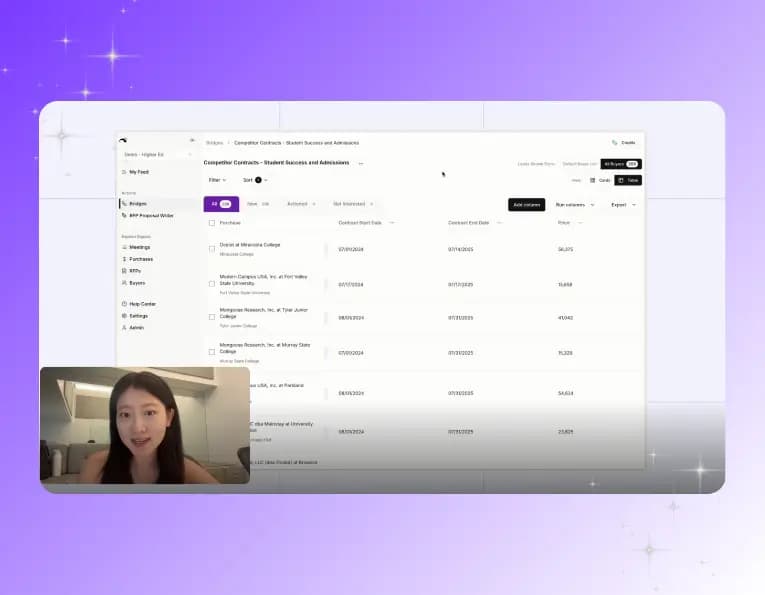 Identify competitor contract expiration datesThe RFP is usually a formality. Starbridge surfaces competitor contract expiration dates so your reps reach accounts before the renewal cycle closes.
 Create a conference campaignTurn conference badge scans into pipeline. Import your contact list, surface buying signals across every account you met, and follow up with context.